ROOT Observer: a privacy-focused security camera
By Andrew Gregory. Posted
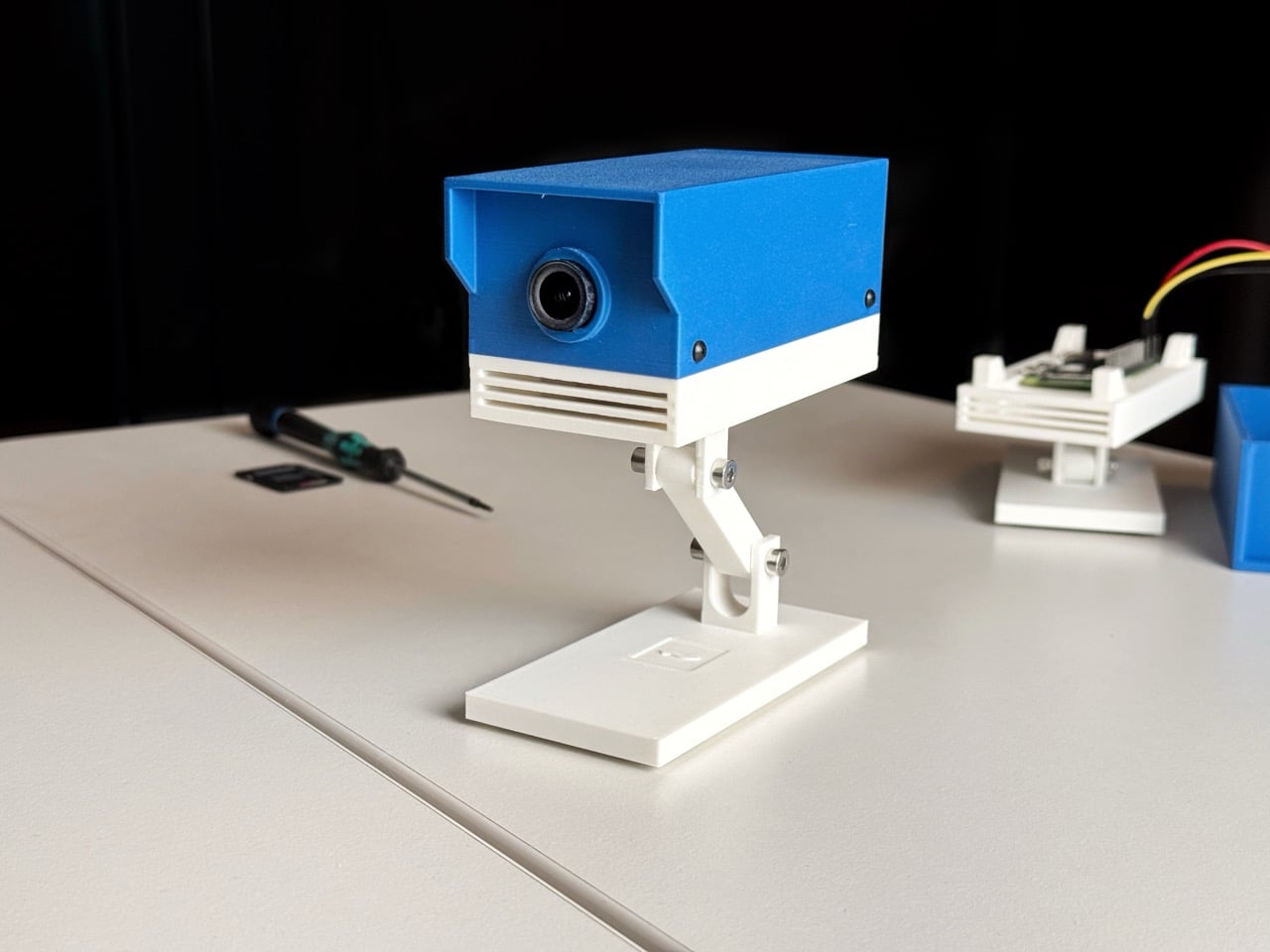
If you’ve read our cover feature this month, you’re doubtless keen to cut down on the amount of your data that ends up in servers halfway around the world in territories you can’t influence by the democratic process. That is part of what led the maker of this project to create the ROOT Observer: a privacy-focused security camera.
“The idea came from my parents asking me to find smart security cameras for their house a few years ago,” says Paul, “so they could check in while on vacation. They had a local NVR (Network Video Recorder) setup, but it wasn’t reliable or remotely accessible, so I ended up going with Google Nest. Not because I like Google’s approach to user data, but because the alternatives were similarly bad from a privacy perspective. The few privacy-focused camera companies that exist tend to target enterprise, and even their privacy claims are hard to verify with closed-source software.

Take back control of your online data, with Raspberry Pi.
“Each camera is a standalone device storing all footage locally. Communication with the app (which is open source, as is the firmware and server code) goes through a relay server that acts as a WebSocket tunnel. Self-hosting is supported and the app makes it easy to swap in your own relay domain. Notification thumbnails are stored in S3, but fully encrypted with keys only the intended device holds, similar to how Signal handles end-to-end encrypted notification images.
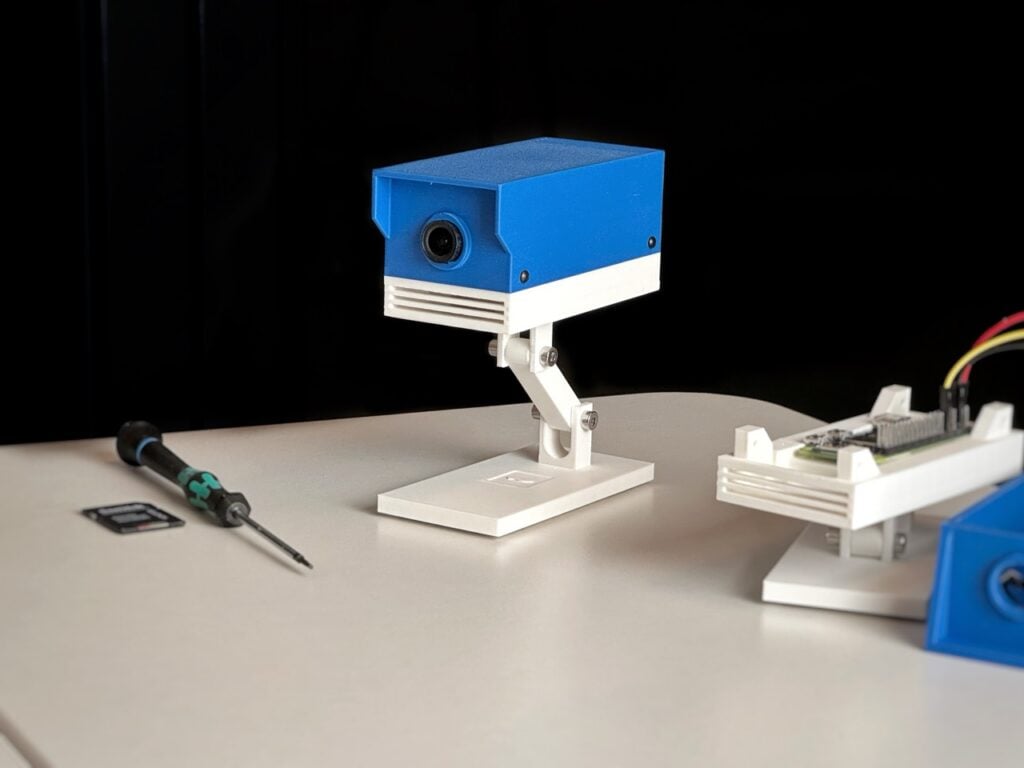
“I started ROOT around mid-2025 and am currently focused on getting the firmware as performant and secure as possible, and making sure the app just works. After that, I’ll dedicate more time to polishing the hardware and packaging. Raspberry Pi Zero 2 W is a natural choice because it packs enough power for local machine learning (person, pet, vehicle detection) without breaking the bank, and has great camera module support. Most of my time so far went into optimisation. The first iteration used FFmpeg and other heavyweight tools that performed poorly on the Zero 2 W. The latest version idles at around 10% CPU with ML and recording active, and can stream video and audio to up to three clients simultaneously, all fully end-to-end encrypted with unique shared secrets per client. Under that heavy load, the Zero 2 W only hits around 40% CPU and stays cool. The only slight hardware bottleneck is the Wi-Fi chip: rpicam-vid continuously captures from the Arducam IMX290 module, and the data is fanned out to multiple consumers like the recorder or live streams. A rolling buffer keeps the last few seconds of footage so detected events can be prepended with frames, ensuring complete recordings even if detection has slight latency.
“Beyond the ready-made product, I’m also keeping things DIY friendly. I‘ve made a guide on how you can build your own privacy-first camera with links to the latest firmware images that can be flashed with Raspberry Pi Imager and am keeping it updated. No programming knowledge is needed for that. I’ll soon be printing the third prototype, this time with a black upper shell (on an FDM printer). For the production version I’m currently eyeing resin printing for a more premium finish.”

Features Editor Andrew trawls the internet for Cool Stuff while keeping the magazine running smoothly.
Subscribe to Raspberry Pi Official Magazine
Save up to 37% off the cover price and get a FREE Raspberry Pi Pico 2 W with a subscription to Raspberry Pi Official Magazine.
More articles

8BitDo 64 Controller review
A near perfect replica of the original N64 controller, but laid out for modern sensibilities and comfort.
Read more →

Paper console
Look at those physical controls! This device is built to be beautiful: it’s made out of walnut and brass.
Read more →

Take Back Your Cloud in Raspberry Pi Official Magazine 165
We’re all-too accustomed to the feling of being watched on the internet. A search for any product leads to adverts, emails, and goodness knows how many bots tracking you. It feels weird and intrusive, and we aren’t being paranoid – they really are watching us. Luckily you don’t have to reply on online services that […]
Read more →